The seismic category encompasses a comprehensive suite of geotechnical and earthquake engineering analyses critical for responsible development in one of the world's most tectonically active urban areas. Anchorage sits at the nexus of the Pacific and North American plates, with the active Aleutian Megathrust subduction zone capable of generating massive earthquakes like the 1964 Great Alaska Earthquake, the second-largest ever recorded at magnitude 9.2. This category integrates subsurface investigation, dynamic modeling, and advanced design strategies to quantify and mitigate seismic hazards, ensuring structural resilience, life safety, and business continuity. For engineers, architects, and developers, engaging these specialized services is not optional; it is a fundamental requirement dictated by the region's extreme seismicity and the devastating legacy of past events.
Anchorage's unique geology amplifies the need for specialized seismic services. The city is underlain by the Bootlegger Cove Formation, a complex sequence of marine clays, silts, and sands deposited during past interglacial periods. This formation is infamous for its sensitive clay layers and lenses of saturated, loose granular soils. The 1964 earthquake demonstrated the catastrophic consequences of this geology, as entire neighborhoods in Turnagain Heights were destroyed not by shaking alone, but by massive landslides triggered by soil liquefaction analysis failures in the Bootlegger Cove clays. Similarly, the deep, soft sedimentary basin beneath the city can significantly amplify ground motions at specific periods, a phenomenon that must be quantified through rigorous site response analysis to avoid structural resonance with mid-rise and high-rise buildings.
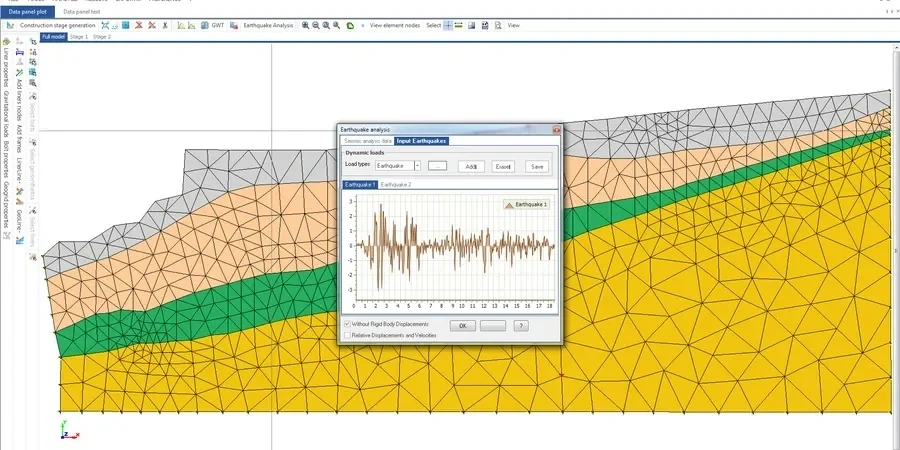
Regulatory compliance in Anchorage is governed by the Municipality's adoption of the International Building Code, which references the stringent seismic provisions of ASCE 7. The ASCE 7-22 standard, with its detailed Alaska-specific ground motion maps, mandates Site Class determinations based on rigorous geotechnical investigation. For sites with a potential for liquefaction or cyclic softening, the code requires advanced mitigation design or structural accommodations. Furthermore, the Alaska Professional Licensing Statutes require that all geotechnical and seismic work be performed under the responsible charge of a licensed professional engineer. A seismic microzonation study, while not a code mandate for every project, is often a critical tool for large-scale developments to map hazard variability across a site and optimize foundation and mitigation costs in a manner that satisfies peer review and regulatory scrutiny.
This category of services is indispensable for a wide spectrum of projects. Critical infrastructure, such as the Port of Alaska modernization, hospitals, and emergency response facilities, requires the highest level of seismic performance, often incorporating performance-based design that goes beyond prescriptive code minimums. Major commercial developments, bridges, schools, and industrial facilities with heavy or vibration-sensitive equipment all require a foundational understanding of seismic hazards. For structures where minimizing damage and downtime is paramount, innovative solutions like base isolation seismic design are increasingly employed. From a single-family home on a sloped lot with suspect soils to a multi-billion-dollar transportation corridor, the principles remain the same: a thorough, site-specific seismic investigation is the bedrock of safe and insurable construction in Anchorage.
Q&A
What makes seismic design in Anchorage more demanding than in other high-seismicity areas like California?
Anchorage faces a unique combination of a massive subduction zone source capable of magnitude 9+ earthquakes and problematic local geology, specifically the Bootlegger Cove Formation. This formation contains sensitive clays prone to cyclic softening and large-scale landsliding, and saturated sands susceptible to liquefaction. The long-duration shaking from a megathrust event demands a focus on cumulative energy dissipation and post-peak strength loss not always critical in crustal fault settings.
What is the difference between a site response analysis and the standard seismic design parameters in the building code?
Standard code parameters are generalized for broad Site Classes and may not capture site-specific amplification effects from a deep sedimentary basin. A site response analysis is a dynamic numerical modeling study that propagates bedrock motions through a detailed soil profile to predict surface ground motions and amplification spectra. It provides project-specific acceleration, velocity, and time histories, often revealing hazards like resonance with mid-rise buildings that generalized coefficients miss.
Is a seismic microzonation study only for very large projects?
While most common for large-scale developments, campuses, or linear infrastructure, a microzonation is valuable for any project where subsurface conditions vary significantly across the site. It maps the spatial distribution of hazards like liquefaction potential, ground motion amplification, and slope instability. This allows for targeted, cost-effective mitigation by placing structures in lower-hazard zones and designing foundations specifically for the hazards in each mapped area.
How have the lessons from the 1964 Great Alaska Earthquake influenced modern seismic codes and practice in Anchorage?
The 1964 earthquake provided a stark, full-scale demonstration of catastrophic ground failure mechanisms like liquefaction-induced lateral spreading and sensitive clay landslides, which were poorly understood before. These observations directly informed the development of modern liquefaction assessment procedures and strict slope stability standards. The event also cemented the critical importance of site-specific geohazard evaluation and led to strict land-use planning and grading codes in areas like the Turnagain bluffs.