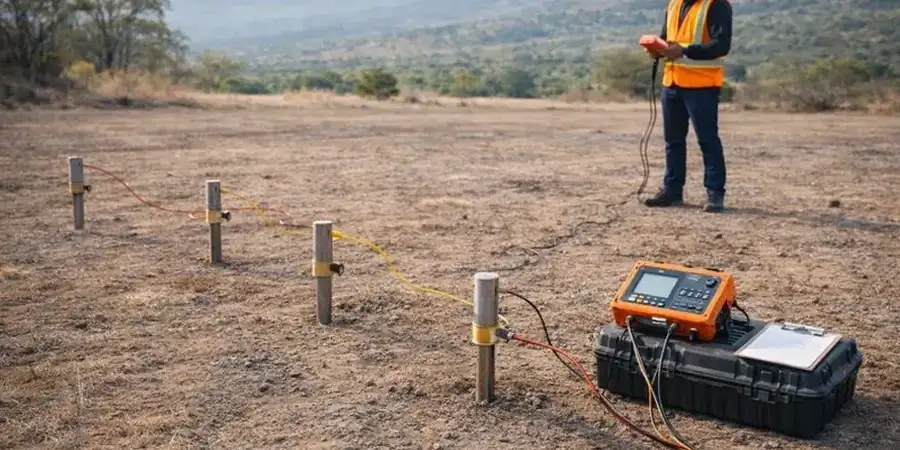
Geophysics in Anchorage, USA, encompasses a suite of non-invasive subsurface investigation methods that are critical for understanding ground conditions in this seismically active region. These techniques, including GPR (Ground Penetrating Radar) survey, MASW / VS30 (shear wave velocity), and Electrical resistivity / VES (Vertical Electrical Sounding), provide essential data on soil layers, bedrock depth, and groundwater without the need for extensive drilling. In Anchorage, where urban development and infrastructure must contend with challenging terrain, geophysical surveys are indispensable for risk mitigation and design optimization.
Anchorage’s geology is dominated by glacial deposits, alluvial fans, and marine sediments, underlain by the tectonically active Cook Inlet basin. The region experiences frequent earthquakes due to the Pacific Plate subduction, leading to complex subsurface structures such as buried channels, fault zones, and variable soil densities. These conditions create significant challenges for construction, as loose sediments can amplify seismic waves or undergo liquefaction. Geophysical methods, such as HVSR microtremor survey (Nakamura method) and Seismic tomography (refraction/reflection), help characterize these features by measuring shear wave velocities and resonance frequencies, directly informing seismic hazard assessments.
The United States, including Alaska, follows national standards such as the International Building Code (IBC) and the ASCE 7 standard for seismic design. For Anchorage, these codes mandate site-specific seismic hazard evaluations, often requiring VS30 measurements to classify soil types (Site Class A through F) and assess liquefaction potential. Geophysical surveys provide the high-resolution data needed to comply with these regulations, ensuring that structures like bridges, hospitals, and schools are built to withstand the region’s unique seismic risks. Local guidelines from the Municipality of Anchorage further emphasize detailed geotechnical investigations for any major development.
Projects that typically require geophysical surveys in Anchorage include high-rise buildings in downtown areas, transportation corridors like the Seward Highway, and critical facilities such as the Ted Stevens Anchorage International Airport. Additionally, pipeline routes for oil and gas infrastructure, residential subdivisions on unstable slopes, and environmental remediation sites benefit from these non-destructive methods. By integrating geophysics early in the design phase, engineers can avoid costly surprises and tailor foundations to the specific subsurface conditions.
Q&A
What are the most common geophysical methods used in Anchorage?
Common methods include GPR for utility detection and shallow mapping, MASW for shear wave velocity profiles, HVSR for site resonance analysis, electrical resistivity for groundwater and contamination studies, and seismic tomography for deep subsurface imaging. The choice depends on project depth, resolution needs, and ground conditions.
How do geophysical surveys help with seismic design in Anchorage?
They provide critical data on soil stiffness, layer thickness, and natural frequencies, which are used to calculate VS30 values and site amplification factors. This information directly supports compliance with IBC and ASCE 7 standards, enabling engineers to design foundations that resist liquefaction and earthquake shaking.
Can geophysical methods replace traditional soil borings?
No, geophysics complements but does not fully replace borings. It offers continuous lateral coverage and identifies anomalies, while borings provide direct soil samples and laboratory data. A combined approach yields the most reliable subsurface model for Anchorage's complex geology.
How long does a typical geophysical survey take in Anchorage?
Duration varies by method and site size. A small GPR or HVSR survey may take a few hours, while larger MASW or tomography projects can span several days. Factors like weather, terrain, and access also influence timelines, but most surveys are completed within one to three field days.